Vol. 68 No. 2 (2026): Journal of the Faculty of Medicine Baghdad
Following decades of discussion, more than 50 international organizations and more than 22,000 researchers and experts convened and made a historic, yet overdue decision to change the name of polycystic ovarian syndrome (PCOS) to Polyendocrine metabolic syndrome (PMOS). This paradigm shift is from a narrow focus on the microscopic features of the ovaries (which are neither present in all patients nor necessary for diagnosis) and a narrow view of menstrual and infertility problems to a broader view of the profound, multisystem involvement far beyond the ovaries and infertility.
PMOS is a metabolic-reproductive-endocrine syndrome that emphasizes that androgen excess, ovulatory dysfunction, and metabolic comorbidities may coexist in different combinations, and that not every woman will demonstrate the same ovarian imaging features. PMOS will help physicians shift from just a gynecological problem to a wider metabolic and cardiovascular risk domain, like hyperglycemia, hypertension, dyslipidemia, and weight problems. The patient's condition will overlap from adolescence through menopause.
In this issue, we published three articles on PMOS:
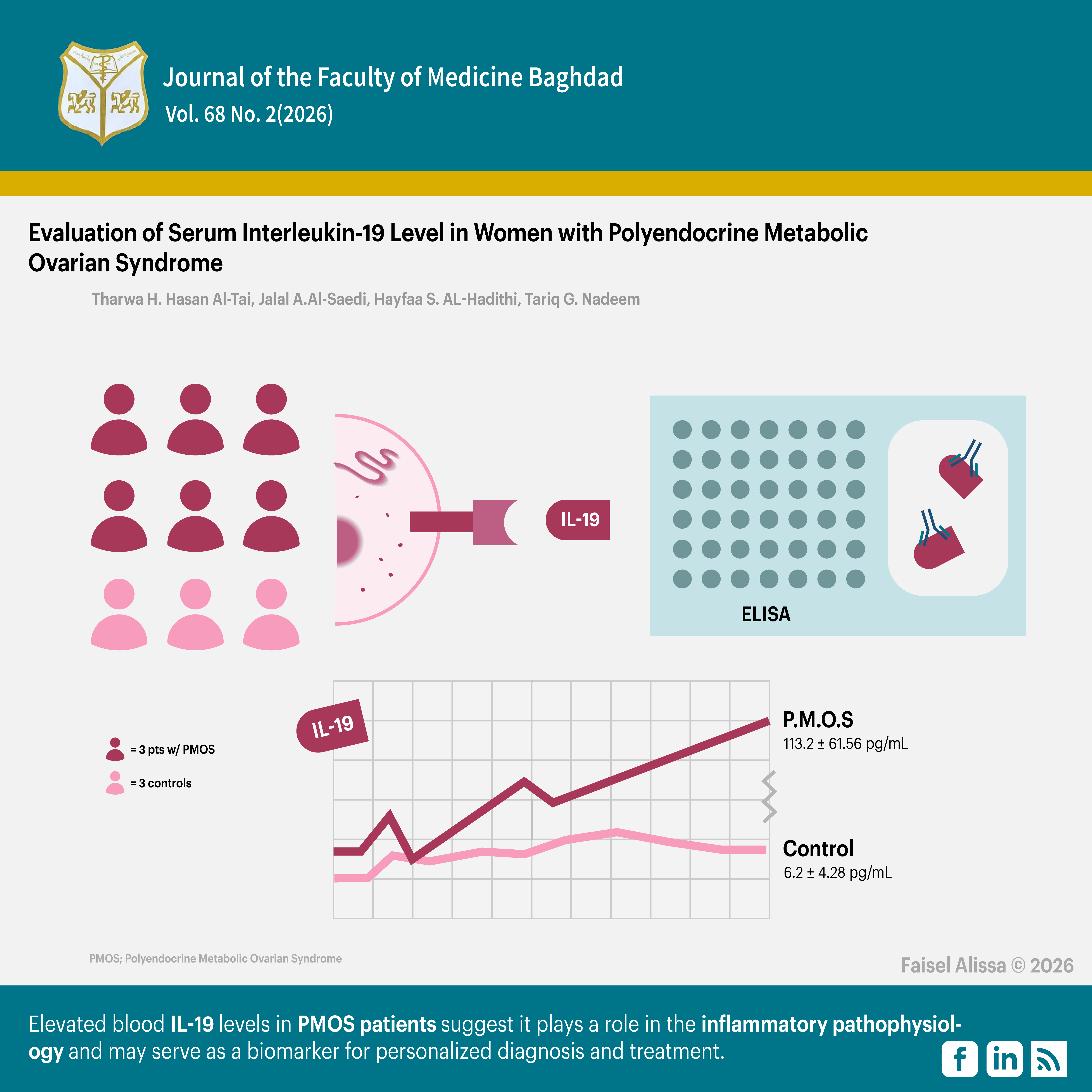
- Evaluation of serum interleukin-19 level in women with PMOS
- Assessment of Corin and Neprilysin in diverse PMOS presentations
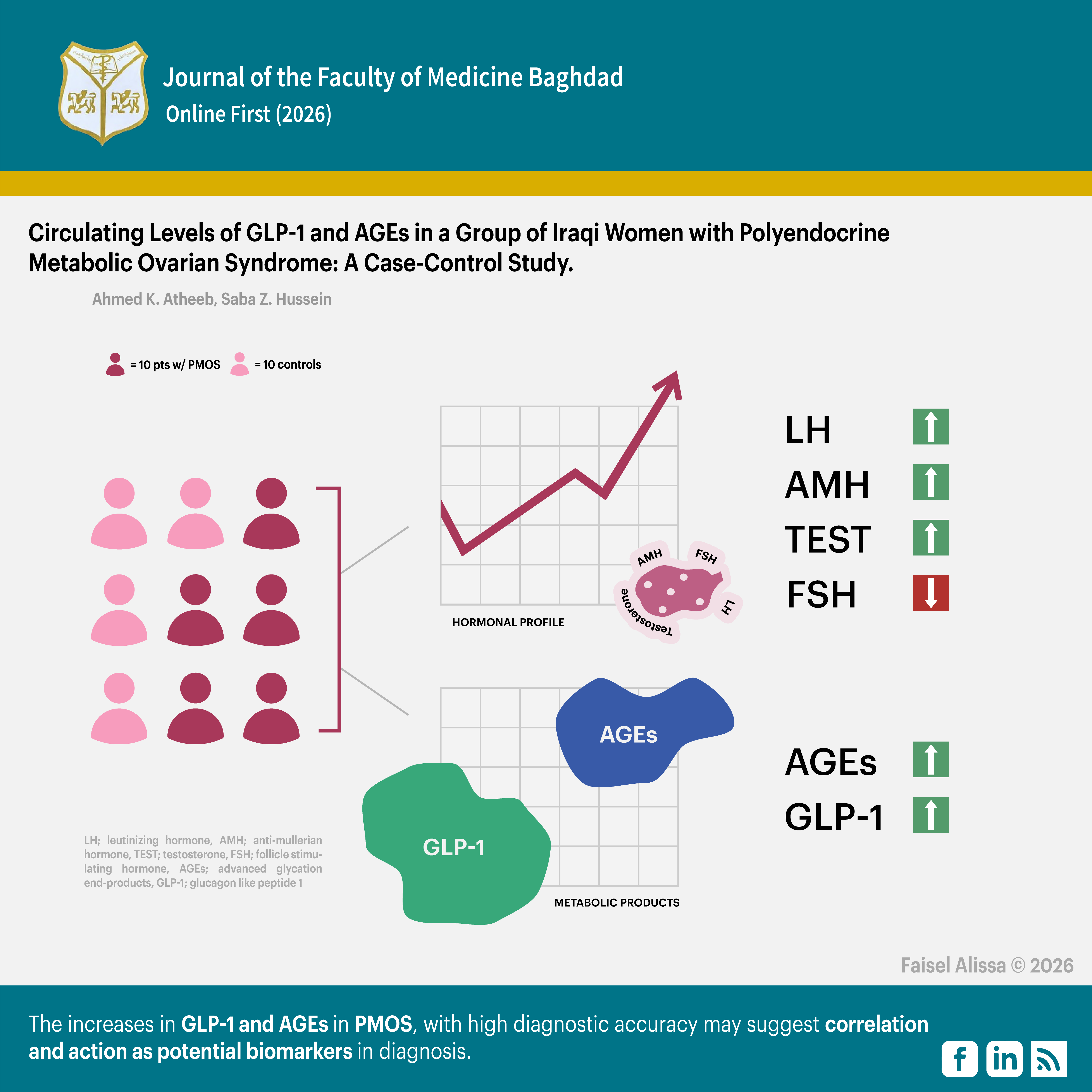
- Circulating levels of GLP-1 and AGEs in a group of Iraqi women with PMOS: a case-control study
In the future, we look forward to more research insights in this arena, since PMOS terminology can serve as a catalyst for more accurate clinical framing, earlier risk screening and detection, and a more coordinated model of care.
Prof Dr Faris Lami
Editor-In-Chief
Published:
01.07.2026















 Creative Commons Attribution 4.0 International license..